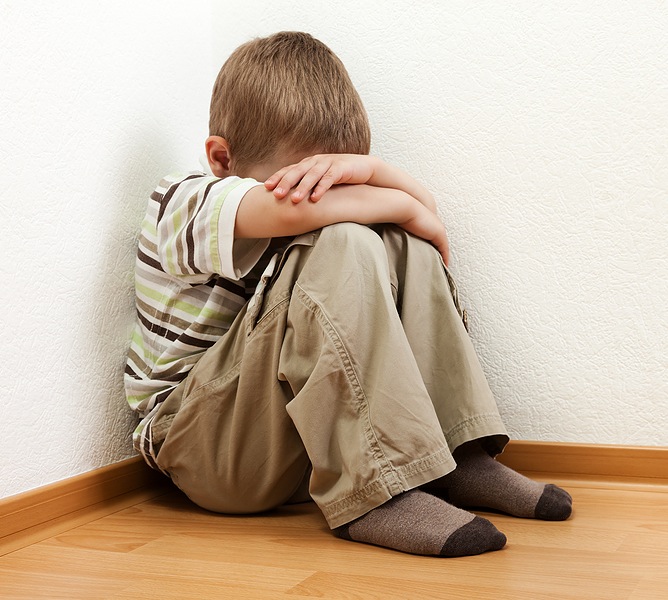
Spanking or otherwise physically disciplining children when they’re young may increase their risk of developing not only one of the mental disorders in children, but also mental disorders when they’re older, according to a new study by researchers at the University of Manitoba. The researchers believe that between 2% and 7% of adult mental disorder cases are a direct result of physical punishment during childhood years. Some of the disorders the researchers said could be attributable to spanking include paranoia, anxiety disorder and major depression.
Spanking may contribute to the relatively high rate of depression in children. It’s estimated that as many as 1 in every 33 children suffers from the condition, symptoms of which can include prolonged sad mood that disrupts daily activities, as well as strong feelings of guilt or worthlessness.
How Common is Spanking?
The common perception is that spanking was once more popular than it is now, but is that really true? According to the American Academy of Pediatrics, which opposes physical punishment in all forms, nearly 50% of American adults say they were physically punished as children through means such as spanking, shoving, grabbing and pushing. However, a recent study conducted at the University of North Carolina indicates that up to 80% of children aged 3 to 5 in the U.S. still undergo spanking to this day.
About the Study
During the University of Manitoba study, Tracie Afifi and other researchers analyzed survey responses from nearly 35,000 adults with a minimum age of 20. The participants were surveyed in 2004 and 2005. The researchers asked the participants the following primary question:
“As a child, how often were you ever pushed, grabbed, shoved, slapped or hit by your parents or any adult living in your house?”
Approximately 6% of the respondents said they received these types of punishment very often, fairly often or sometimes during childhood. These respondents also said that they were not subjected to other types of maltreatment, such as sexual abuse or outright physical abuse. As compared to respondents who said they were never physically disciplined as children or displayed mental disorders in children, the members of this 6% increased their risk of:
-
Panic disorder by 24%
-
Depression by 41%
-
Alcoholism by 59%
Other Forms of Discipline
The researchers believe that their study should be taken seriously by physicians and parents. Afifi said that physicians should work with parents to teach them about alternative forms of discipline that don’t include physical punishment, such as talking through the problem or doing more to reinforce good behavior.
Although the study adds to a growing body of evidence suggesting that physical punishment may lead to mental disorders, the researchers were quick to point out that the study found a link of association but not necessarily causation. Other factors besides physical punishment could have been at play in making some of the respondents more susceptible to mental disorders.
The study did include one major limitation in that the respondents recalled their childhood experiences using only memory. In defense of the study, it should be noted that people tend to clearly remember negative experiences from childhood, according to various research.
Mental Disorders in Children: The Bottom Line
Researchers from Canada’s University of Manitoba have conducted a study finding that children who are spanked or otherwise physically punished are significantly more likely to develop mental disorders later in life.
The full text of the study can be found online in the medical journal Pediatrics.